

This is Step 2 in our St. Petersburg building roadmap. In Step 1, you learned how to pick the right partner. Now we’re diving into the blueprint—where we turn coastal building codes from limitations into features that make your home stand out.
The Roadmap to Your Dream Home:
- The Partner: Vetting for Technical Expertise
- The Blueprint: Designing for Coastal Resilience (You are here)
- The Investment: Navigating the 50% Rule and Budgets
- The Proof: Neighborhood Success Stories
The Design Challenge: Luxury vs. Compliance
Most homeowners worry that flood-resistant construction means living in a bunker. They think elevation requirements will kill the curb appeal on their Snell Isle or Shore Acres lot.
Here’s the reality: At IridiumDev, we see elevation as an opportunity. A well-designed elevated home gives you better views, more privacy, and a more dramatic look than anything built at grade level.
1. Mastering the “Freeboard”
St. Petersburg requires new homes to sit at least 1 foot above Base Flood Elevation (BFE). But many of our clients go higher with what’s called “Freeboard”—extra height beyond the minimum.
- The Benefit: That extra height can seriously cut your flood insurance costs and give you a buffer against rising seas or future policy changes.
- The Design Tip: We use architectural terracing and modern floating staircases so the elevation feels like a grand entrance, not a steep climb.
2. The Tech Behind “Invisible” Protection
You want that open-concept, glass-heavy modern look. But you also need hurricane-resistant construction that can handle 160mph+ winds. Here’s how we do both:
- Steel Moment Frames: These allow for massive floor-to-ceiling windows and sliding glass walls while maintaining the structural integrity required for 160mph+ winds.
- FEMA-Rated Flood Vents: These are permanent openings in lower-level walls (garages or storage areas) that let water flow through during a flood. This equalizes pressure and prevents your foundation from collapsing.
Your Coastal Design Checklist
Use this list to ensure your blueprint is as functional as it is beautiful:
- Foundation Selection: Are you using deep-set concrete pilings or a reinforced stem-wall? For St. Pete’s sandy soils, deep pilings provide the most stability during storm surge.
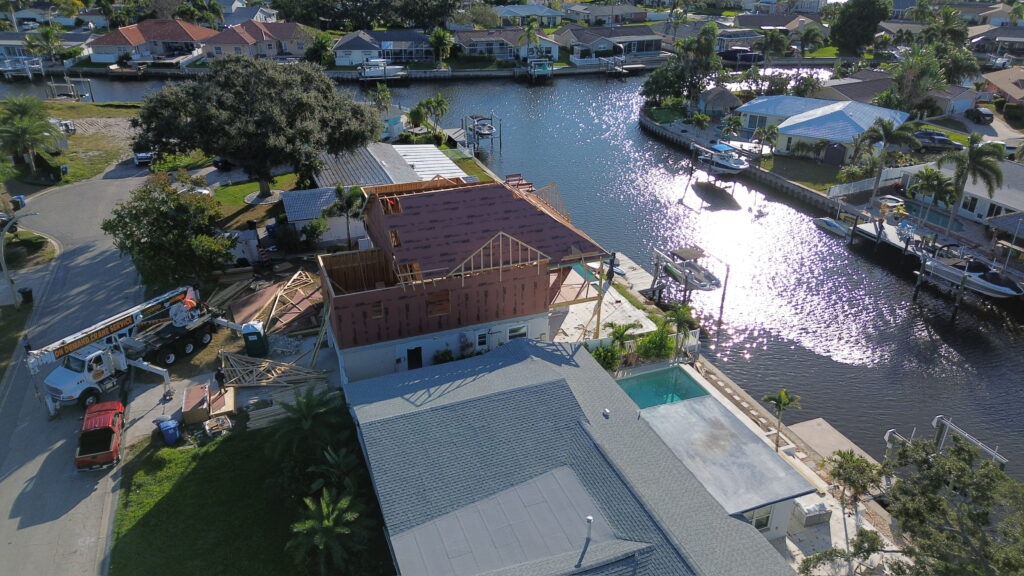
- The “First Floor” Strategy: In high-flood zones, we design your project so the original first floor is used only for parking and storage. By moving all finished living space to the new upper level, we ensure your home is built above the flood line, making the FEMA 50/50 rule a non-factor for your build.
- Continuous Load Path: Ensure your design connects the roof to the walls and the walls to the foundation with hurricane straps and steel reinforcement. This “chain” keeps the house anchored during high winds.
Get Modern Elegance Without Compromise
When you integrate elevated home solutions early in the design process, you don’t sacrifice style for safety. You end up with a high-performance home that captures Gulf breezes, offers panoramic views, and stands as a fortress against the elements.
Your Next Step: The Investment
A resilient design is the plan. The budget is the reality. In Step 3, we break down what it actually costs to build in St. Petersburg—including how the “50% Rule” affects your bottom line and how to get a free custom build estimate.